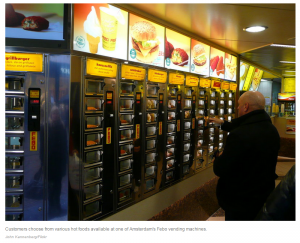
 Even as recently as a few short years ago, the vending machine was seen as something of a stop gap device – a temporary solution to the problem of hunger or thirst in between meals. People who didn’t necessarily have time in between classes or on work breaks could look to the vending machine for a quick snack, soft drink or bottle of water. Thanks to a wide range of different technological advancements, those days are well and truly over. Case in point: many fast food restaurants around the world are actually replacing human workers with state-of-the-art vending machine options for a wide range of different reasons.
The Febo fast food chain in Amsterdam, for example, opened a number of locations in the last few years that don’t use human employees to serve things like hamburgers, french fries and similar types of items. Instead, all of these meals are prepared using high quality (and hugely efficient) vending machine technology. These types of restaurants are commonly referred to as automats, describing the fact that your food is more likely to be served by a vending machine than it is by an actual person.
In the Febo fast food chain in particular, human workers are still required to a certain degree to make sure that the vending machines remain stocked with all of the ingredients they need to prepare the meals of customers. From the customer perspective, however, the change is dramatic – all you do is walk up to the machine, insert your money and a hot meal is prepared automatically right before your very eyes. You don’t even have to interact with another person at all if you don’t want to.
These types of advancements are coming at a bit of a controversial time, particularly in the United States. Workers in the fast food industry have long lobbied for larger salaries that are more in compliance with the types of jobs that they’re actually required to do. Some people argue that as the push for higher wages in the fast food industry becomes louder, it will only increase the speed at which humans are replaced by these types of vending machines as a result.
It’s difficult to argue with the fact that vending machines that replace fast food workers benefits both business owners and consumers. Business owners need to hire significantly fewer employees, increasing their profits and decreasing their operational costs as a result. Consumers get to enjoy the same food that they always have, but in a much faster and more efficient way thanks to the technology on display. It will be interesting to see what shape this particular issue takes in just a few short years time.